


Every hard rain moves water across your fields. When it runs in the same path, it carries topsoil with it and cuts a gully you have to farm around. Diekemper Excavating builds the conservation practices that stop that loss: grassed waterways, terraces, tile repair, culverts and washout repair. We have worked farm ground around Carlyle since 1977, and we own every machine we bring to your field.
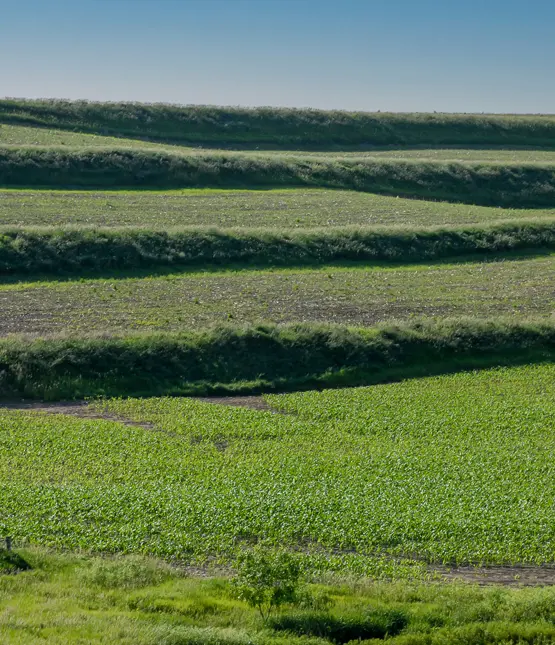
A grassed waterway turns a natural drainage path into a broad, shallow channel planted to grass. Water still leaves the field, but the sod holds the soil in place. We shape the channel to the width, depth and grade on your plan, smooth it so you can cross it with equipment, and leave it ready for seeding.
Terraces break a long slope into shorter sections. Each ridge slows runoff so more water soaks in and less soil washes downhill. We build broad-based and grassed-backslope terraces and the outlets that go with them, laid out to your design.
Many conservation practices qualify for cost-share through USDA’s Environmental Quality Incentives Program (EQIP), run by the Natural Resources Conservation Service (NRCS). We build practices to the design and specifications your local NRCS or Soil & Water Conservation District office provides, so the finished work meets the standard needed for payment.
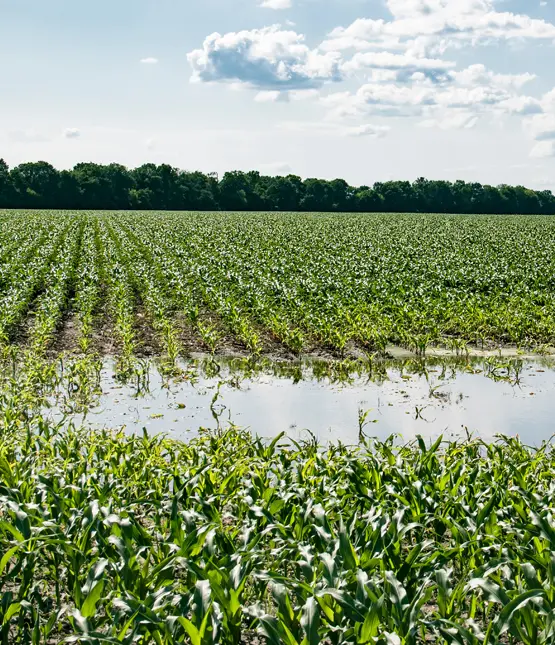
Wet spots, standing water and sinkholes in a field usually mean a broken or plugged tile line. We find the problem, dig it out, repair or replace the damaged section, and backfill so the repair doesn’t settle. Fixing tile early protects yields and keeps a small hole from becoming a big one.
We install and replace culverts under field entrances, private lanes, and driveways. A culvert sized and set at the right grade keeps water moving and stops it from washing out your crossing. We set the pipe, bed and backfill it, and finish the crossing with rock.
A washout grows with every storm. We fill and reshape gullies, rebuild washed-out lanes and field edges, and add a waterway, culvert or rock where it is needed so the problem does not come back.
Often, yes. Grassed waterways are a standard NRCS practice and are frequently funded through EQIP. Contact your local NRCS office to apply; we build to the design they provide.
Usually after harvest or before planting, when the ground is firm enough to work and the field is open. We’ll plan around your crop schedule.
Look for wet spots that stay wet after the rest of the field dries, holes or sinkholes over the tile line, or water backing up at the outlet.

Fill out the form below or give us a call and get a free quote today.